
The government and financial sector regulators buried their differences on the proposed Financial Stability & Development Council (FSDC) after Finance Minister Pranab Mukherjee offered the Reserve Bank of India governor a sweetener.

The bottom lines of several private sector banks have taken a hit following the recent guidelines released by the Reserve Bank of India (RBI) on alternate investment fund (AIF) investments. Last month, the RBI announced that regulated entities, such as banks, non-bank lenders, and home financiers, cannot invest in AIFs that have directly or indirectly invested in companies that have borrowed money from the lenders. In case an entity had already made such an investment, they must liquidate the investment or make 100 per cent provision, RBI had said.

In September 2013, FMC was brought under the Finance Ministry.

The Adani group, buoyed by a sharp recovery in its share prices over the past year, is set to embark on a series of roadshows this week to raise up to $4 billion (approximately Rs 33,254 crore) through equity and refinancing of older debt, according to banking sources. The roadshows, scheduled to take place in major cities, will inform investors about the group's investment plans across renewable energy, petrochemicals, and infrastructure development.

Companies think they are too big to bow before regulators.

'...similar to the 2008 global financial crisis, the 2012 taper tantrum, or the 2018 midcap crash.' 'This could lead to a substantial decline in activity and revenues for the broking industry.' 'When this will happen is uncertain, but as brokers, we must be prepared for such a downturn.'

If the gift is received from a relative, there is no tax implication. But if the gift is received from a non-relative and exceeds Rs 50,000 in value during a financial year, the entire value of the gift is taxable.

No regulation of the derivatives market could work without a strong mandatory clearing mechanism that provides raw data on exposure and use to regulators in policing the markets for misuse and containing associated credit, market and other risks, says Sonali Ranade
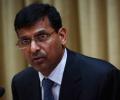
A vibrant financial system could can help finance those who wanted to create jobs.

Loan against gold as a product is catching on fast. Let's keep the momentum going, but aim for sustainable growth. A few bad apples should not ruin the brunch, argues Tamal Bandyopadhyay.

At the heart of Paytm's slide lies the abject failure of its Super App strategy, notes Indrajit Gupta.

Mercedes and Ferrari, Red Bull's main rivals, had both said any breach would bring carry-over benefits for this season and next, and the implications were huge and had to be addressed.
India must learn from the missteps made by financial regulators in the US and UK.

'India's emergence as a top crypto market comes despite a regulatory and tax environment that can be challenging for the industry to navigate.'

The coaching-tuition-profiteering model built on the back of a broken education system is a scandal and an abomination, and must go, asserts Shekhar Gupta.

The governor made it clear that the RBI is aware of what's happening and acts accordingly, but doesn't make a noise about that, points out Tamal Bandyopadhyay.

These are usually found among small and midcaps. It is not easy to find such stocks, especially after a strong bull market, discovers Debashis Basu.

The Securities and Exchange Board of India (Sebi) on Wednesday barred financial influencer Mohammad Nasiruddin Ansari, operating with the handle 'Baap of Chart' and known as Md Nasir on social media, from accessing the securities market. Further, the market regulator has asked him to disgorge Rs 17.2 crore for indulging in unregistered investment advisory. 'Baap of Chart' has over 443,000 subscribers on YouTube and 83,000 followers on X (formerly Twitter) and has provided trading recommendations and courses.

The IMF's Financial System Stability Assessment Update said India had improved its supervision and regulations in the 20 years since it started liberalising its economy and that its financial system fared well in the global financial crisis.

The 'Rating Level 4' means that the financial market regulators have all regulatory measures "fully in force"

For the startup ecosystem in India, the scorecard so far has been a mixed bag, observes Akhil Gupta.
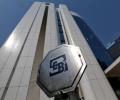
Capital markets regulator Sebi has kept in 'abeyance' the proposed initial share sale of securities depository NSDL. However, the Securities and Exchange Board of India (Sebi) did not clarify further. The National Securities Depository Ltd (NSDL) filed its preliminary papers with the capital markets regulator on July 7.

Government has set up a Financial Sector Legislative Reforms Commission to streamline the financial sector laws.

Smallcap mutual funds recorded net outflows for the first time in 30 months in March as investors pulled out money after the markets regulator, the Securities and Exchange Board of India (Sebi), warned against "froth" in the mid and smallcap space. Active equity mutual fund (MF) schemes raked in Rs 22,600 crore in March. The March inflow is 16 per cent lower than the two-year high inflow of Rs 26,860 crore in February, shows data from the Association of MFs in India (Amfi).
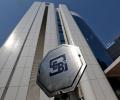
Days before Sony Group pulled the plug on the $10 billion deal, Zee group founder Subhash Chandra had written to Finance Minister Nirmala Sitharaman, blaming Sebi for trying to "scuttle" the merger of its flagship media firm Zee Entertainment Enterprise with the Japanese firm and subsequent investment in the merged entity. Alleging market regulator Sebi is "acting with a predetermined mind", the Zee group patriarch requested the finance minister to take the necessary steps "to safeguard the interest of the minority shareholders of Zee". Chandra in his letter dated January 16, seen by PTI, said Zee and all other people have been cooperating in the investigation related to the alleged fund diversion by promoters and expressed concern over a new notice issued by the market regulator to former directors of Zee.

'You cannot have only one product or one market or one customer segment.'

The Aam Aadmi Party dismissed the allegation as "baseless" and claimed it was "another conspiracy hatched by the BJP" to tarnish AAP's image ahead of voting for Lok Sabha seats in Delhi and Punjab.
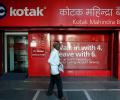
Kotak Mahindra Bank on Saturday reported a 25 per cent growth in its March quarter net profit at Rs 5,302 crore, limited by a drop in the core income due to narrow interest margins. On a standalone basis, the city-headquartered lender's Q4 net profit grew 18 per cent to Rs 4,133 crore. The FY24 consolidated net profit grew 22 per cent to Rs 18,213 crore.
The cryptocurrency exchanges in India have got a fresh lease of life following the bull run in Bitcoin, which briefly hit a new all-time high of more than $69,000. Siddharth Sogani, managing director of CREBACO, expects the price to cross $1,00,000 by the end of the year. This will see a sharp reversal in the Indian market, which has largely been dormant since the new tax regime was implemented in 2023.

Tamal Bandyopadhyay, columnist and author of several books like From Lehman to Demonetisation: A Decade of Disruptions and Sahara: The Untold Story, tells Rediff.com why Yes Bank depositors should not panic and the current crisis at India's fifth largest private lender does not pose any systemic risk.

As many as 80-85 per cent Paytm wallet users will not face any disruption because of regulatory actions, and the remaining users have been advised to link their apps to other banks, RBI Governor Shaktikanta Das said on Wednesday. The Reserve Bank of India on January 31 barred Paytm Payments Bank Ltd (PPBL) from accepting deposits, credit transactions, or top-ups in any customer accounts.

The Sebi chief said that although the idea of an SRO has been challenged in court, he is hopeful of its implementation.

The government has exempted units of investment trusts and ETFs issued by entities based in GIFT City or traded in exchanges there from capital gains tax. The Central Board of Direct Taxes (CBDT) notified the exemption from capital gains tax any unit of investment trust; a unit of a scheme; and a unit of an Exchange Traded Fund (ETF) launched under the International Financial Services Centres Authority (Fund Management) Regulations, 2022. Gujarat International Finance Tec-City (GIFT)-IFSC is being promoted as a tax-neutral enclave for the financial sector.

Laxity in enforcing KYC and allied norms suspected; money laundering gaps also on probe panel's mind

The Confederation of Indian Industry (CII) on Sunday urged Indian startups to keep their valuation "realistic" and distinguish between the goals of the organisation and its founder. "Startups may strive for long-term value creation rather than short-term valuations. "The valuations of businesses should be kept as realistic as possible," CII said in its Corporate Governance Charter for Startups.

Goldman Sachs is likely to face a fine of around 20 million pounds from UK financial regulator FSA, just months after US Securities and Exchange Commission imposed a penalty on the banking major, a media report said.
